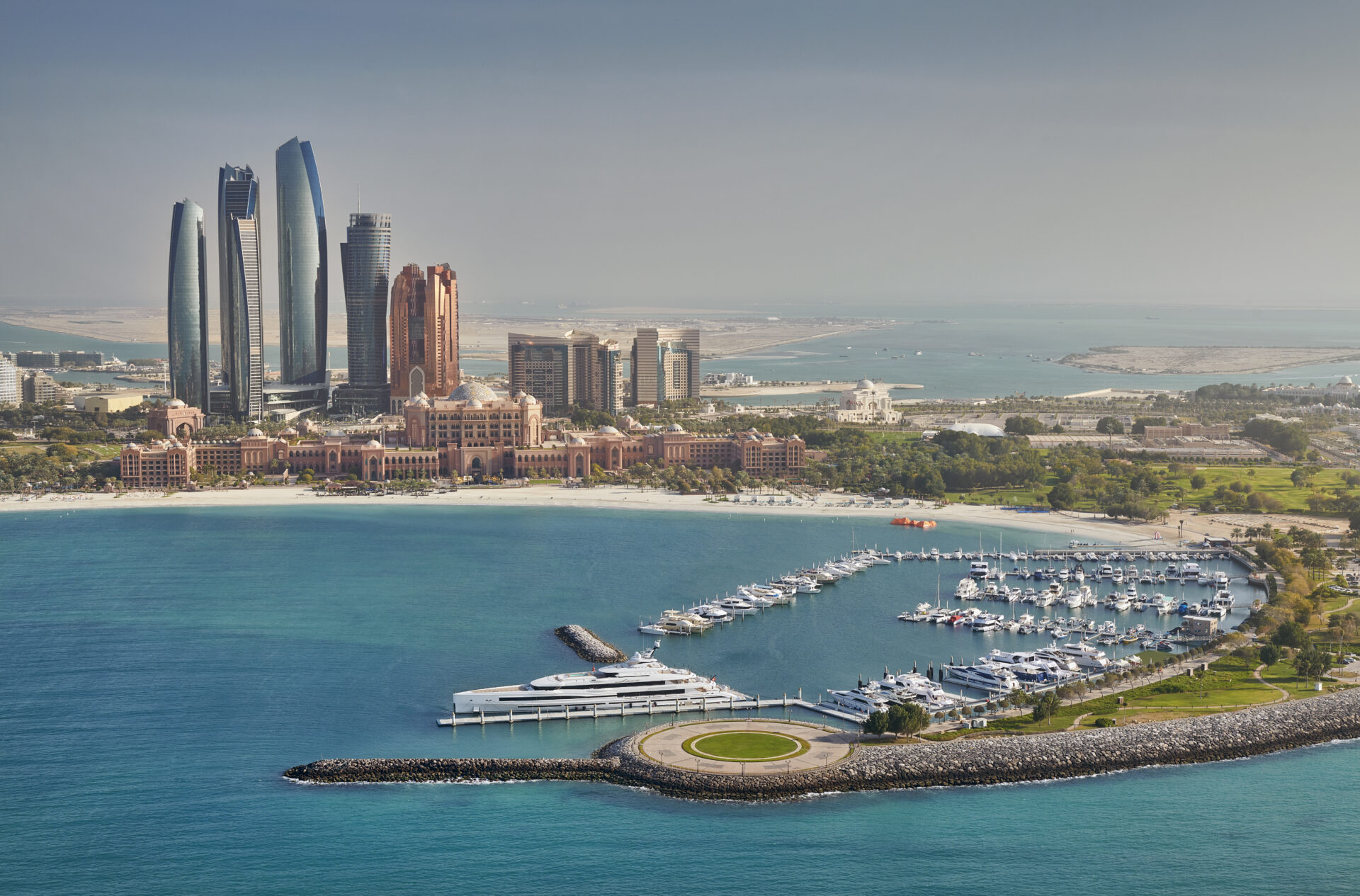
Abu Dhabi occupies an unusual position among the world’s great luxury destinations. Unlike cities that rely on spectacle alone, the emirate has invested systematically in substance: Michelin-starred restaurants, architecturally significant museums, and hotels that maintain service standards most properties only aspire to. The arrival of the Michelin Guide Abu Dhabi in 2022 formalised what the city’s growing number of regular visitors had come to understand: this is a culinary destination worth travelling for in its own right.
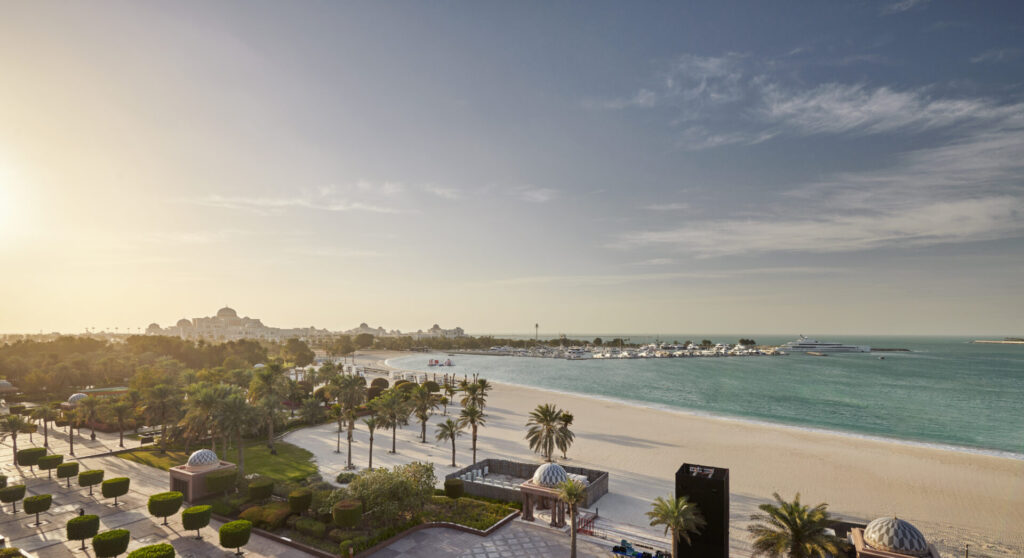
The broader appeal, however, runs deeper than food and accommodation. The emirate’s cultural programme, anchored by Jean Nouvel’s Louvre Abu Dhabi and the Sheikh Zayed Grand Mosque, provides genuine enrichment rather than the kind of manufactured attraction that can characterise newer destinations. Saadiyat Island’s beaches, Al Reem Island’s emerging wellness quarter, and Yas Island’s entertainment facilities add further dimensions to a city that continues to evolve at considerable pace.
What follows is drawn from multiple visits to the UAE’s capital, covering the hotels, restaurants, wellness spaces, and cultural attractions that most clearly illustrate why Abu Dhabi has become essential to any serious exploration of the region.
Where to stay
Abu Dhabi’s hotel landscape reflects the emirate’s broader character: considered rather than frantic, with an emphasis on space and service over transient novelty. Properties range from beachfront palaces stretching along the Corniche to urban towers overlooking the financial district, each serving a distinct purpose. The variety within the luxury segment is genuinely impressive, with Arabian grandeur sitting alongside minimalist contemporary design, and both delivering staff-to-guest ratios that make personalised attention the norm rather than the exception.
The city’s geographic spread also works in guests’ favour. The cultural quarter near the Louvre and Qasr Al Watan, the beaches of Saadiyat Island, and the commercial centre of Al Maryah Island each offer distinct experiences, and Abu Dhabi’s more measured pace makes moving between them straightforward.
Emirates Palace Mandarin Oriental
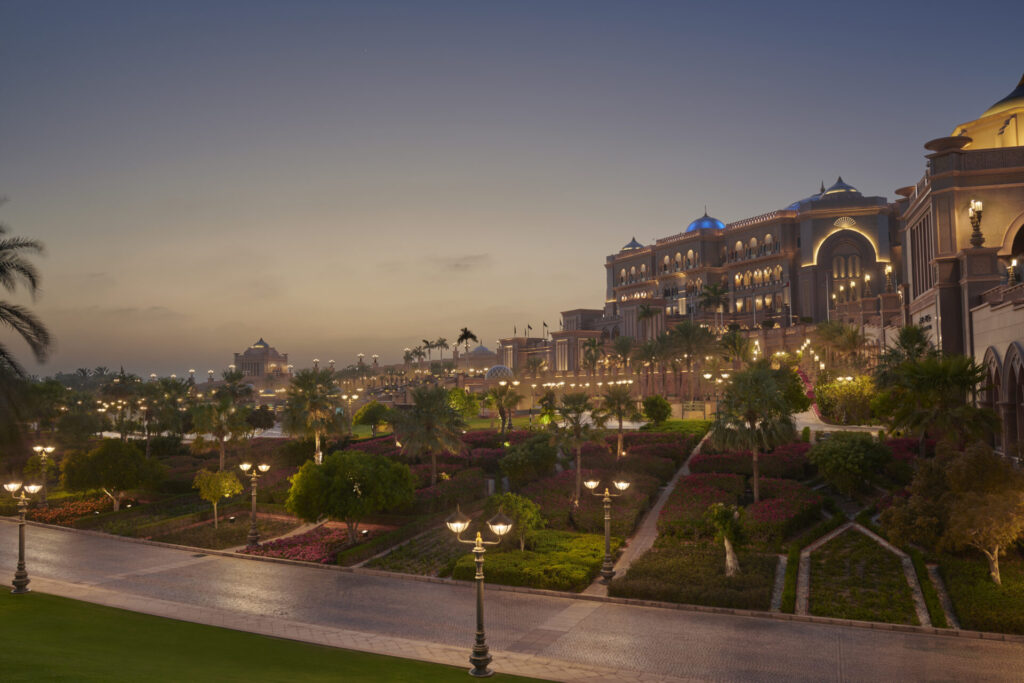
Few hotels anywhere in the world occupy quite the same position as Emirates Palace Mandarin Oriental. The property stretches one kilometre along Abu Dhabi’s coastline, adorned with more than 6,000 square metres of 22-karat gold leaf and crowned by 114 domes. The scale is genuinely palatial, surpassing Buckingham Palace in size, yet Mandarin Oriental’s stewardship of the property has introduced a layer of thoughtfulness that prevents it from feeling merely overwhelming.
Two Michelin-starred restaurants anchor the dining programme: Talea by Antonio Guida, led by Head Chef Luigi Stinga, and Hakkasan. The EP Club provides a private experience within the larger estate, including 24-hour golf cart transport across the grounds and access to a dedicated beach section with substantial daybeds and cabanas. The 1.3-kilometre private beach, award-winning spa, and Acqua di Parma Barbiere, the grooming destination trusted by Manchester City manager Pep Guardiola, complete an offering of remarkable breadth. The property serves two audiences simultaneously: those drawn to its theatrical grandeur, and those who prefer to use it as a backdrop for something considerably more private.
The Ritz-Carlton Abu Dhabi, Grand Canal
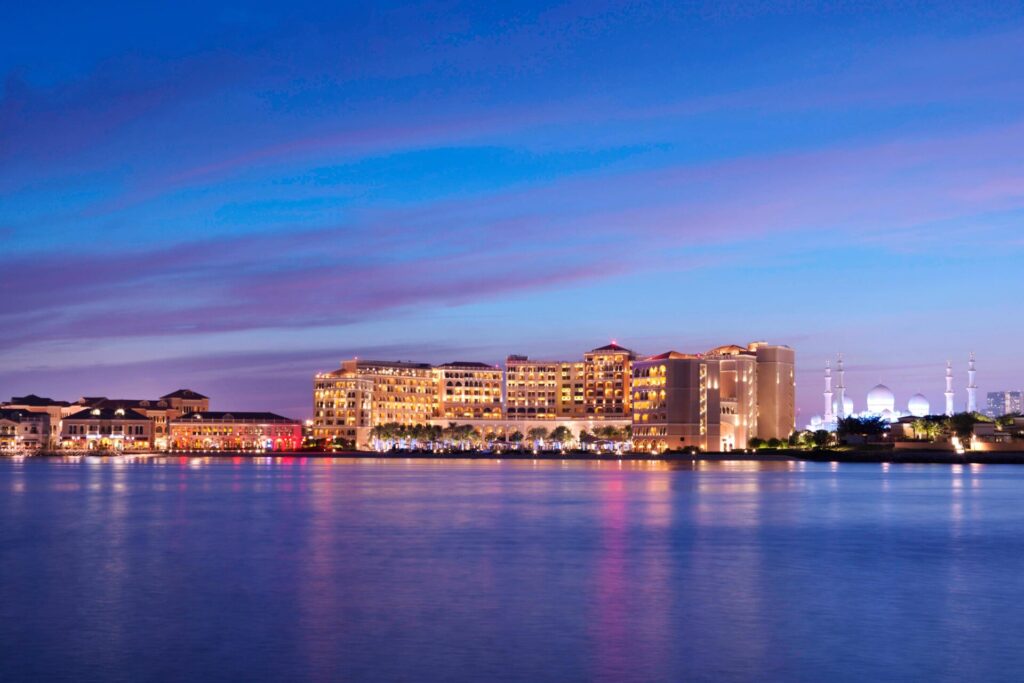
Set across 57 acres of landscaped grounds with the Sheikh Zayed Grand Mosque as its backdrop, The Ritz-Carlton Abu Dhabi, Grand Canal presents a compelling case for resort-style luxury. The Venetian Renaissance architecture is unusual in the UAE context, and the property’s 506 spacious rooms, deep marble bathtubs, and quality amenities from Diptyque and Asprey establish the expected level of comfort. Twenty minutes from the airport, it positions itself as a retreat rather than a city-centre base, a distinction that suits guests prioritising tranquillity over proximity.
The dining programme is particularly strong. Li Jiang, positioned on the promenade level with unobstructed views of the illuminated mosque, holds a Michelin Guide recommendation and demonstrates consistent technical skill across its modern Asian menu. The Forge delivers accomplished steakhouse cooking with premium cuts sourced internationally. Families are well served by dedicated Ritz Kids programming, separated pool areas, and the sheer scale of on-site facilities, which include a 21,500-square-foot ESPA spa and a private beach along the Grand Canal. Summer rates offer meaningful value during off-peak periods without any reduction in the standards that define the experience year-round.
Rosewood Abu Dhabi
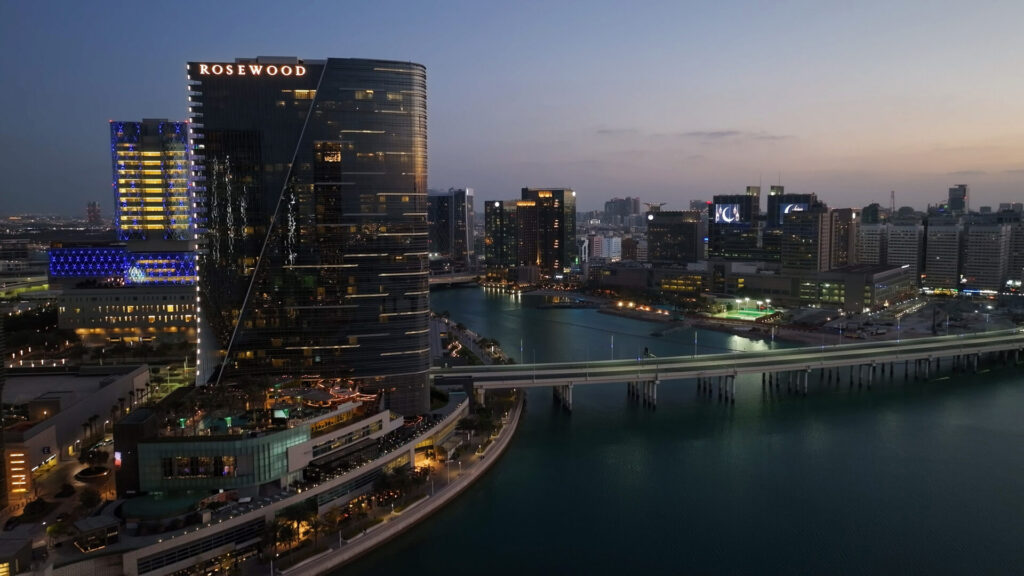
The 34-storey glass tower on Al Maryah Island’s waterfront takes a different approach to luxury, one built on precision and restraint rather than scale. Executive Rooms span 54 square metres and feature Italian marble bathrooms, while the rooftop pool provides an unlikely sense of calm given the urban setting. Direct access to The Galleria, Abu Dhabi’s foremost shopping destination, adds practical convenience, and the hotel sits ten minutes from Saadiyat Island’s cultural quarter.
The dining and drinking programme rewards exploration. La Cava, an intimate wine cellar beneath the hotel, maintains a minimal menu and almost no social media presence, an approach that belies serious culinary ambition. The kitchen’s Australian ribeye, a 250-gram wagyu cut, has drawn considerable word-of-mouth among Abu Dhabi’s food community for good reason. Dai Pai Dong delivers accomplished Cantonese cooking, from delicate dim sum to precisely executed crispy pork belly, while The Hidden Bar’s collection of more than 300 gins makes it a notable destination in its own right. The hotel’s success comes from execution that takes nothing for granted.
Where to dine
The transformation of Abu Dhabi’s restaurant scene over the past decade has been considerable. What was once a hospitality market driven primarily by corporate demand has developed genuine culinary ambition, with the Michelin Guide’s arrival in 2022 confirming a quality that residents had long recognised. The range now spans Emirati heritage cooking, contemporary Italian, Cantonese classics, and Lebanese coastal cuisine, all executed to standards that compare favourably with the world’s great dining cities.
Talea by Antonio Guida
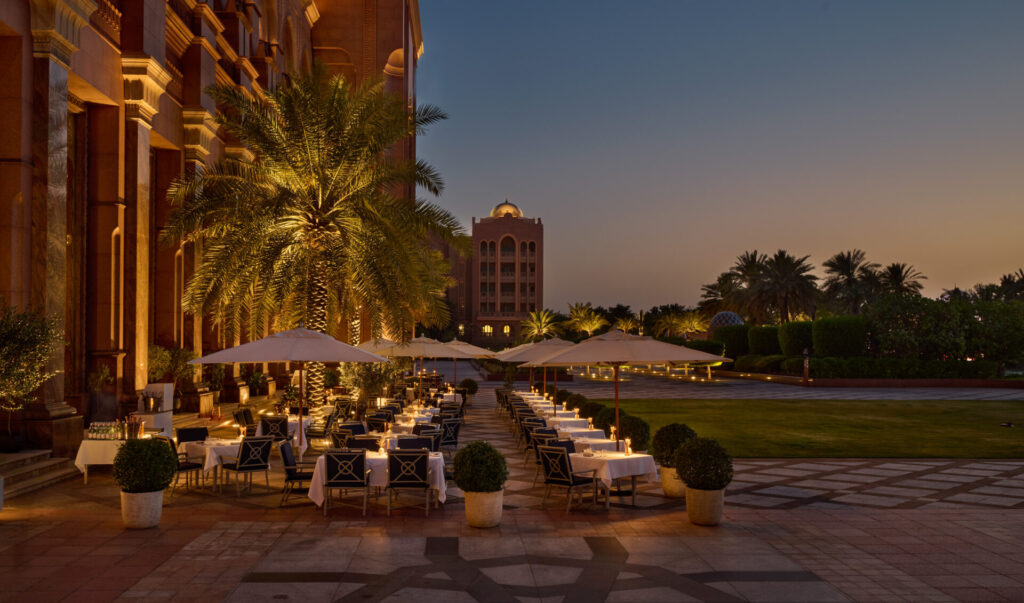
Talea occupies an elegant al fresco space within the Emirates Palace grounds, where Head Chef Luigi Stinga, recipient of the inaugural Michelin Guide Abu Dhabi Young Chef Award, executes Antonio Guida’s vision of cucina di famiglia with clarity and discipline. The six-course “Il Nostro Percorso” tasting menu demonstrates a kitchen that respects Italian culinary tradition without being constrained by it. Handmade ravioli with smoked aubergine, seared langoustine with grilled lettuce and citrus bisque, and an oyster risotto of notable balance are among the dishes that have earned the restaurant its Michelin star.
Produce from Emirates Palace’s own gardens supplements carefully selected local suppliers, and the menu adjusts with seasonal availability. Service strikes the difficult balance between attentive and unobtrusive, and the outdoor setting, particularly as temperatures cool through the evening, provides an atmosphere that feels natural rather than engineered. The meal concludes with tiramisu assembled tableside, a theatrical detail that works because the technique and ingredients behind it are sound.
Lebanese Terrace
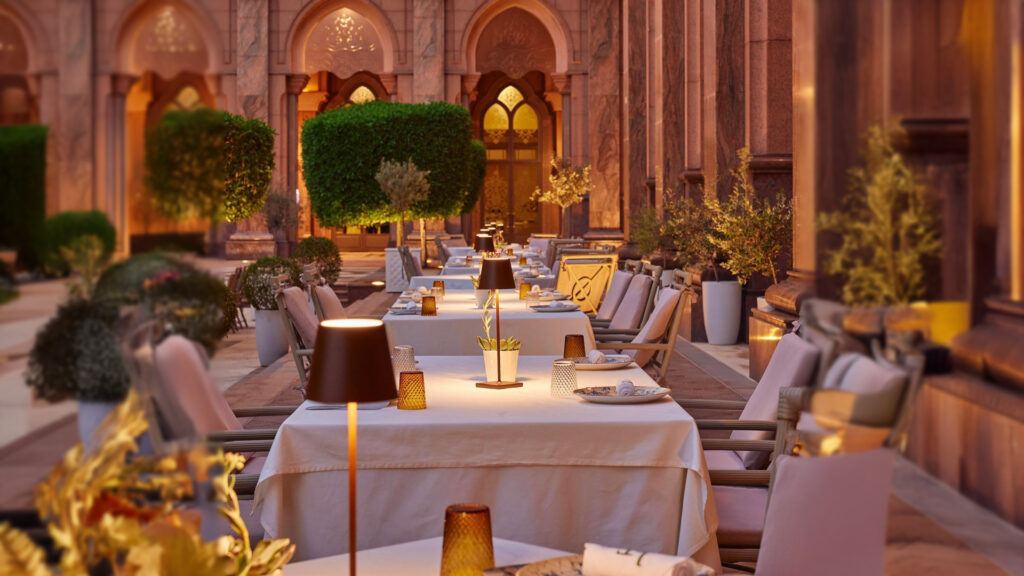
Lebanese Terrace opened at Emirates Palace Mandarin Oriental in July 2023, bringing authentic Lebanese coastal cooking to the palace gardens under Chef de Cuisine Gilber Sakr. The two-storey venue accommodates 220 guests across indoor and outdoor sections, its design incorporating intricate aquamarine walls, olive trees, and stained-glass windows. Outdoor booths with fire elements provide warmth as evening progresses, creating an intimacy that the restaurant’s capacity might suggest impossible.
The menu focuses on Levantine cooking prepared daily from fresh ingredients. The assorted seafood platter, featuring grilled lobster tail, jumbo prawns, hammour, and salmon, demonstrates char-grilling technique that achieves proper caramelisation without any bitterness. The mezze programme impresses equally: hummus that balances nutty tahini against bright lemon acidity, fattoush with impeccably fresh vegetables, and crispy chilli and garlic potatoes that make a confident accompaniment. The gazleyah dessert, combining muhalabia with cotton candy and caramel sauce, provides a playful conclusion that the kitchen earns through the quality of everything that precedes it.
La Cava
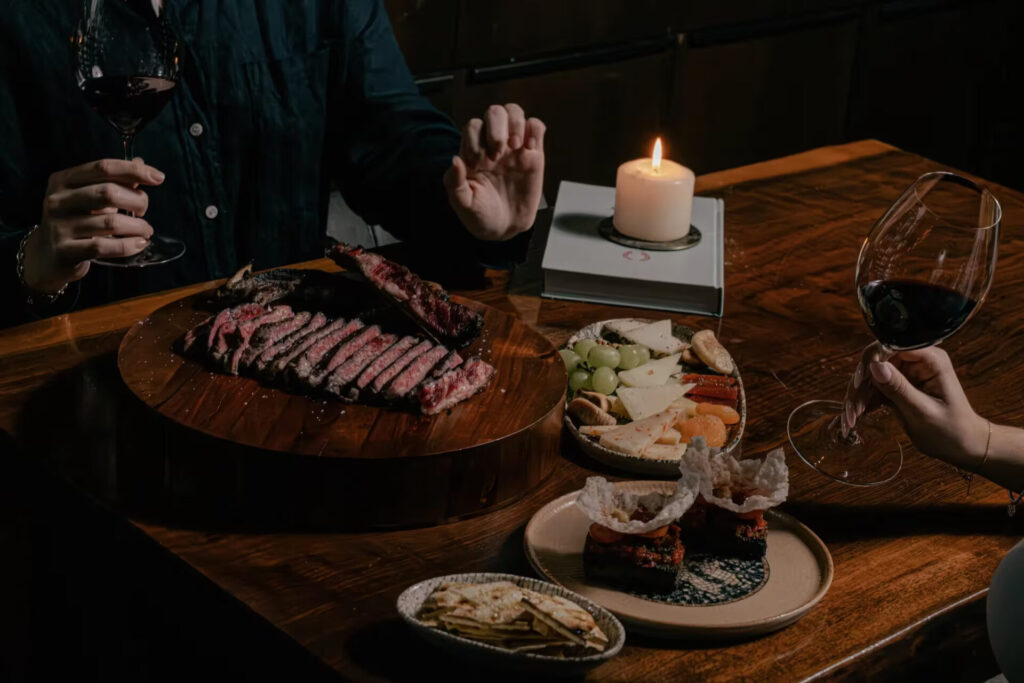
La Cava operates beneath Rosewood Abu Dhabi with an almost deliberate absence of fanfare. The wine cellar setting is intimate, with candlelit tables, generous spacing between them, and more than 300 wine varieties overseen by a sommelier who maintains a monthly rotation of regional focus. The menu is concise by design, as the kitchen’s philosophy prioritises perfecting a small number of dishes over managing an extensive list. Golden croquetas with smoked beef hollandaise and calamares fritos in tempura batter establish technical precision from the outset.
The main courses justify the restaurant’s growing reputation, particularly a 250-gram Australian wagyu ribeye that achieves a balance of tenderness and structure, and richness and delicacy, rarely encountered at this price point. Japanese Wagyu A5 from Hokkaido provides an alternative of equal standing, and a Basque cheesecake with Peruvian chili morita offers a refined conclusion. The young chef responsible for this kitchen is producing work of considerable quality, and La Cava remains the kind of discovery that rewards those willing to seek it out.
Li Jiang
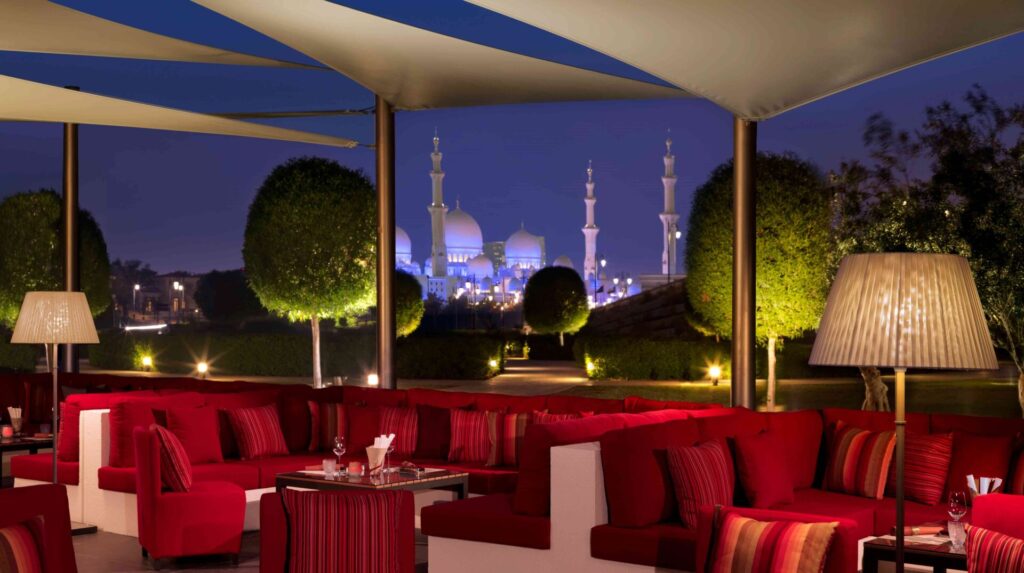
Li Jiang sits on The Ritz-Carlton’s promenade level with an outdoor terrace that frames the illuminated Sheikh Zayed Grand Mosque directly. The open kitchen provides both transparency and a degree of theatre, and the Michelin Guide recognition reflects a kitchen that maintains consistent technical standards across a broad menu. The homemade dim sum programme is particularly impressive: steamed chicken siew mai with black truffle and prawn har gao with red tobiko demonstrate the kind of precision that separates this from the region’s many competent Asian restaurants.
Main courses maintain the standard without compromise. Beef tenderloin chow mein prepared with proper wok technique, crunchy green papaya salad with prawns and diver scallops, and wasabi prawns with avocado, mango and mint salsa all demonstrate a kitchen confident with bold flavours. Nothing arrives greasy despite the complexity of preparation, and seasoning enhances rather than dominates. The combination of technical rigour, generous portions, and that mosque view as evening settles makes Li Jiang a dining experience that rewards planning around.
Where to relax
Abu Dhabi’s offer beyond hotels and restaurants has expanded significantly, with cultural landmarks, entertainment facilities, and wellness spaces that each merit dedicated time.
Kintsugi Space, Al Reem Island
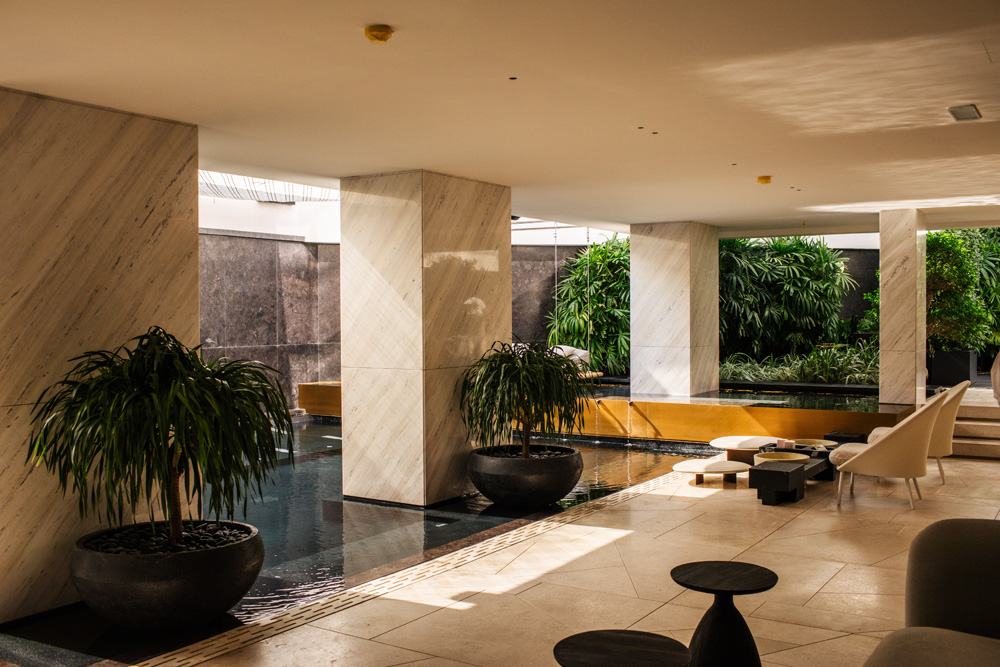
Named after the Japanese tradition of mending broken pottery with gold, Kintsugi Space occupies a seven-floor townhouse on Al Reem Island as the UAE’s first women-only wellness retreat of its kind. The facility combines quantum technology with ancient healing practices in ways that are grounded rather than gimmicky. The experience begins with a Quantum Assessment using sound frequencies and Su Jok therapy to identify areas of physical tension, followed by a personalised two-day treatment programme that might include Greek Hammam rituals, NASA-grade Koepe machines, water massage on heated beds, laser acupuncture, and adaptogenic treatments.
The team includes celebrity facialist Anastasia Achilleos and Ayurvedic practitioner Dr Divya Sudheesh, working under the creative direction of spa specialist Patrizia Bortolin. Between sessions on heated quartz crystal beds and Japanese Kassaji facials using volcanic stone, guests eat slowly prepared vegan cuisine by Italian chefs and are encouraged to step away from mobile phones for the duration of their stay. The two-day commitment is considered essential to the cumulative effect the programme is designed to achieve, as the layered approach builds across treatments in ways that a single session cannot replicate.
Ferrari World, Yas Island
Ferrari World’s headline attraction remains Formula Rossa, which held the Guinness World Record as the world’s fastest rollercoaster. The ride accelerates from zero to 100 km/h in approximately two seconds, reaching 240 km/h in 4.9 seconds across a 2.07-kilometre track that subjects riders to forces of up to 4.8 g and climbs to 52 metres. Protective goggles are issued before boarding. Beyond Formula Rossa, the park contains more than 40 attractions spanning family-friendly experiences, driving simulators, and the duelling Fiorano GT Challenge. A full day on site is required to do it justice.
Louvre Abu Dhabi, Saadiyat Island
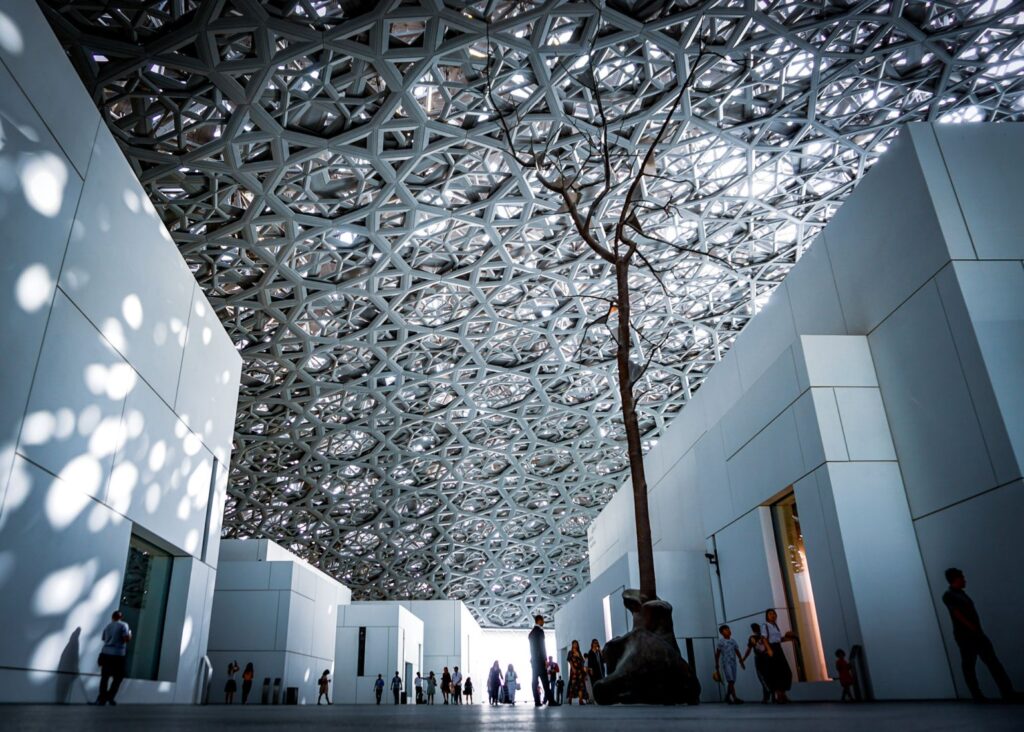
Pritzker Prize-winning architect Jean Nouvel designed the Louvre Abu Dhabi as a museum city on Saadiyat Island. The central dome spans 180 metres in diameter, weighs approximately 7,500 tonnes, and features 7,850 star-shaped perforations that cast shifting patterns of dappled light throughout the day. After dark, the perforations become visible stars. The 26 galleries beneath it house works spanning human civilisation, with pieces from different cultures and periods positioned alongside one another to encourage unexpected comparisons. Three hours is a reasonable minimum for a considered visit.
Sheikh Zayed Grand Mosque
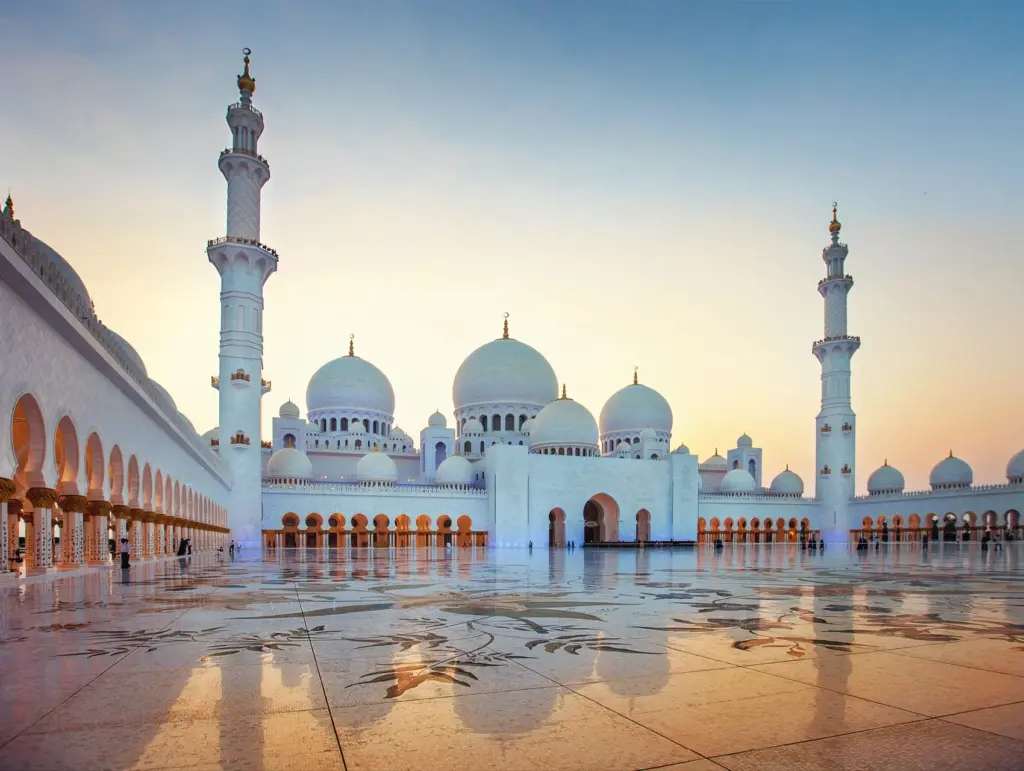
The Sheikh Zayed Grand Mosque covers more than 555,000 square metres and accommodates some 55,000 worshippers. The late Sheikh Zayed conceived the structure as a physical expression of Islamic cultural diversity, drawing materials and craftspeople from across the globe. The main prayer hall houses the world’s largest hand-knotted carpet, woven by 1,200 women over two years, and seven chandeliers incorporating millions of Swarovski crystals hang throughout the space.
Arriving in late afternoon and remaining through sunset allows visitors to observe the full transition from warm golden light to the ethereal blue illumination that defines the mosque’s evening appearance. Entry is free; respectful dress is required.