Where Michelin-starred precision meets the soul of Italian family cooking
The restaurant’s name references the Italian word for a plant cutting, symbolising growth and renewal, a philosophy woven through every aspect of the dining experience. Over an evening that stretched languidly from sunset into darkness, we explored why this has become one of Abu Dhabi’s most celebrated Italian restaurants, where technique serves tradition rather than overwhelming it.
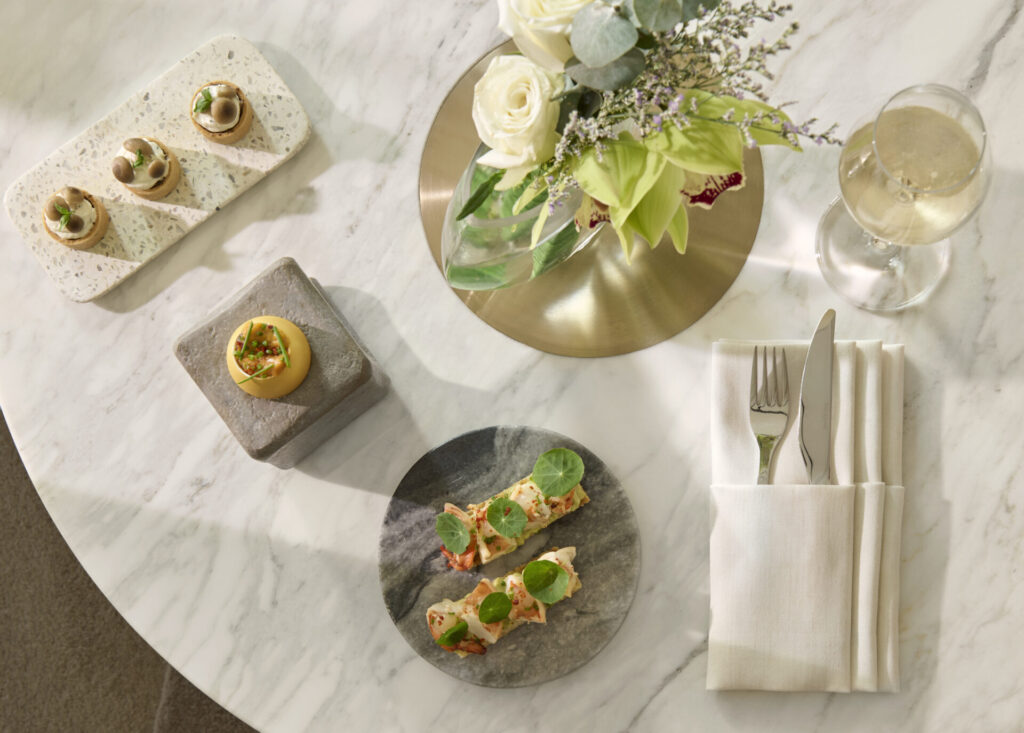
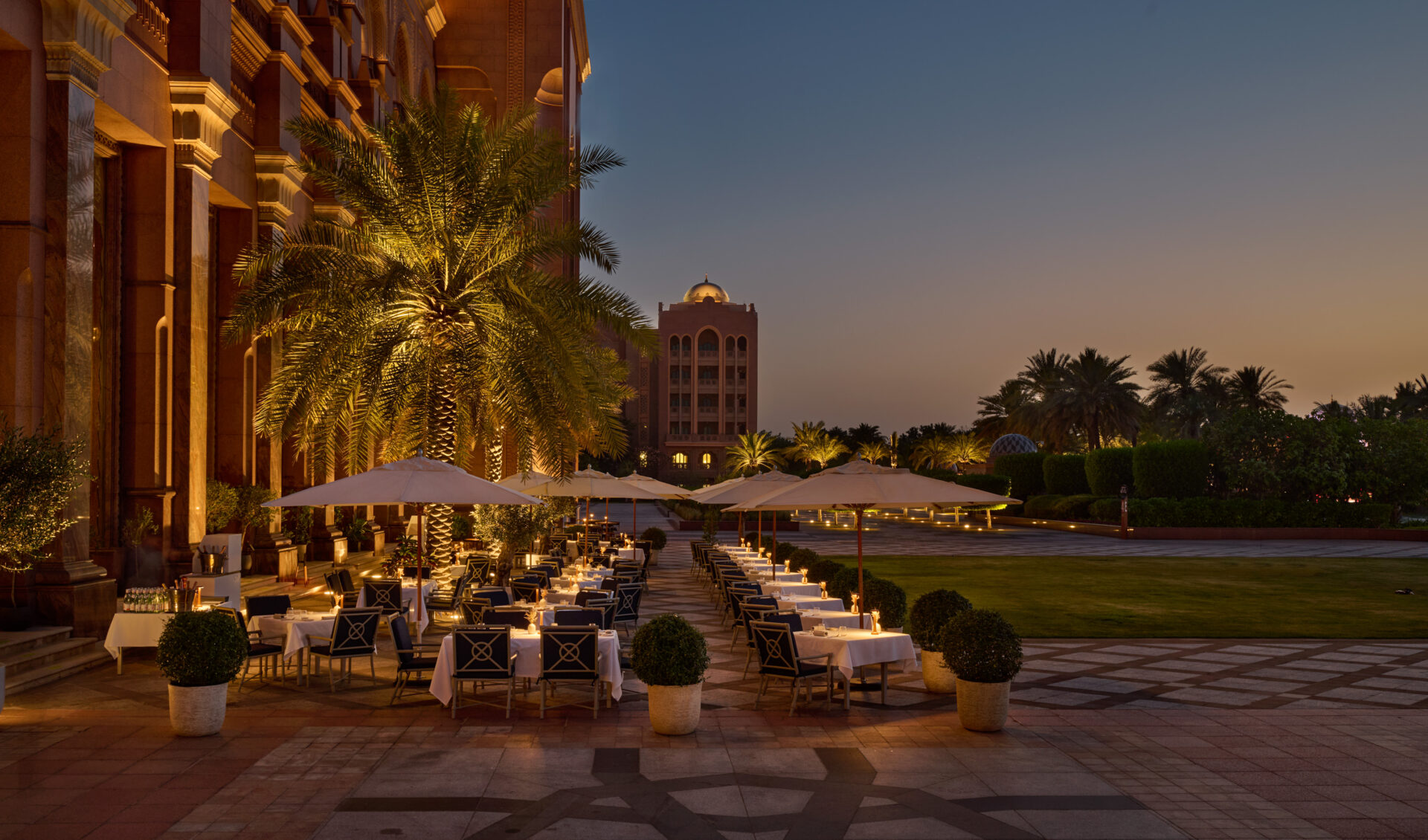
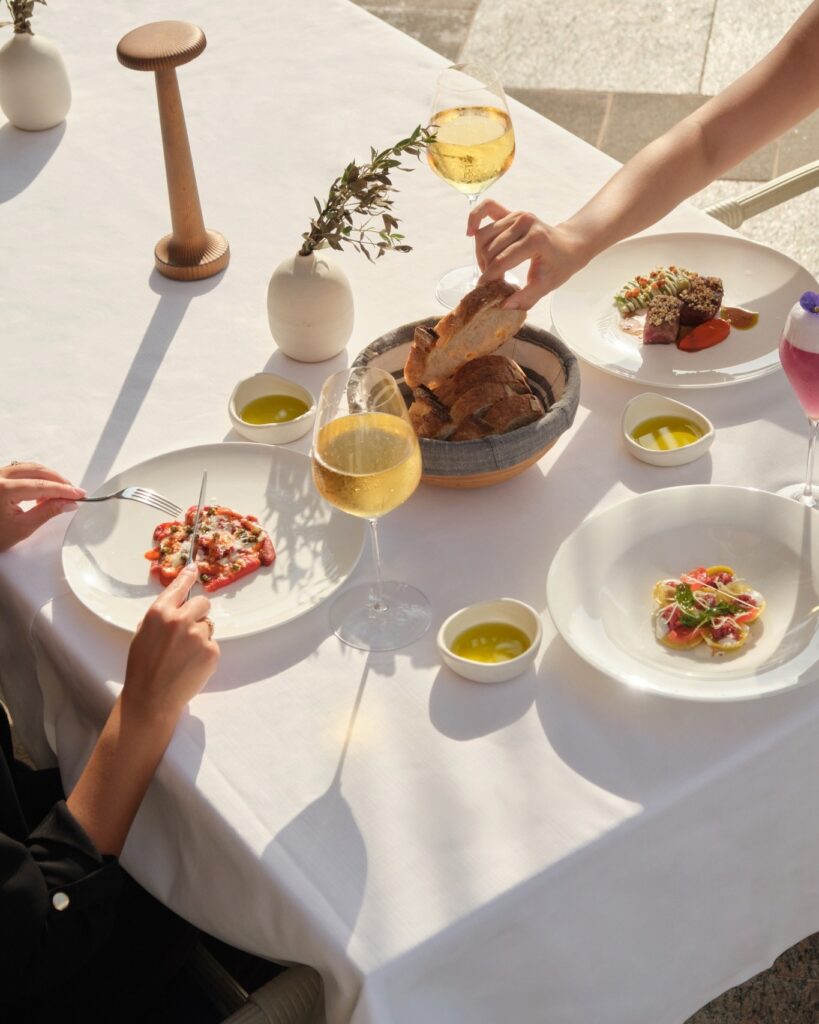
The al fresco setting frames the experience beautifully. Contemporary furnishings in bold colours sit beneath soaring arches, whilst the open kitchen provides glimpses of the precision unfolding within. As dusk settled over the palace grounds, subtle lighting created intimacy without sacrificing the sense of dining somewhere special. The rustling of palm fronds and the distant sound of fountains provided a gentle soundtrack, whilst perfectly pitched service ensured we never wanted for anything yet never felt observed.
Beginning the journey
We selected the tasting menu, Il Nostro Percorso, which translates as “Our Journey.” The name proved apt, as each course revealed different facets of Stinga’s approach to Italian cooking, building progressively in both complexity and richness whilst never losing coherence.
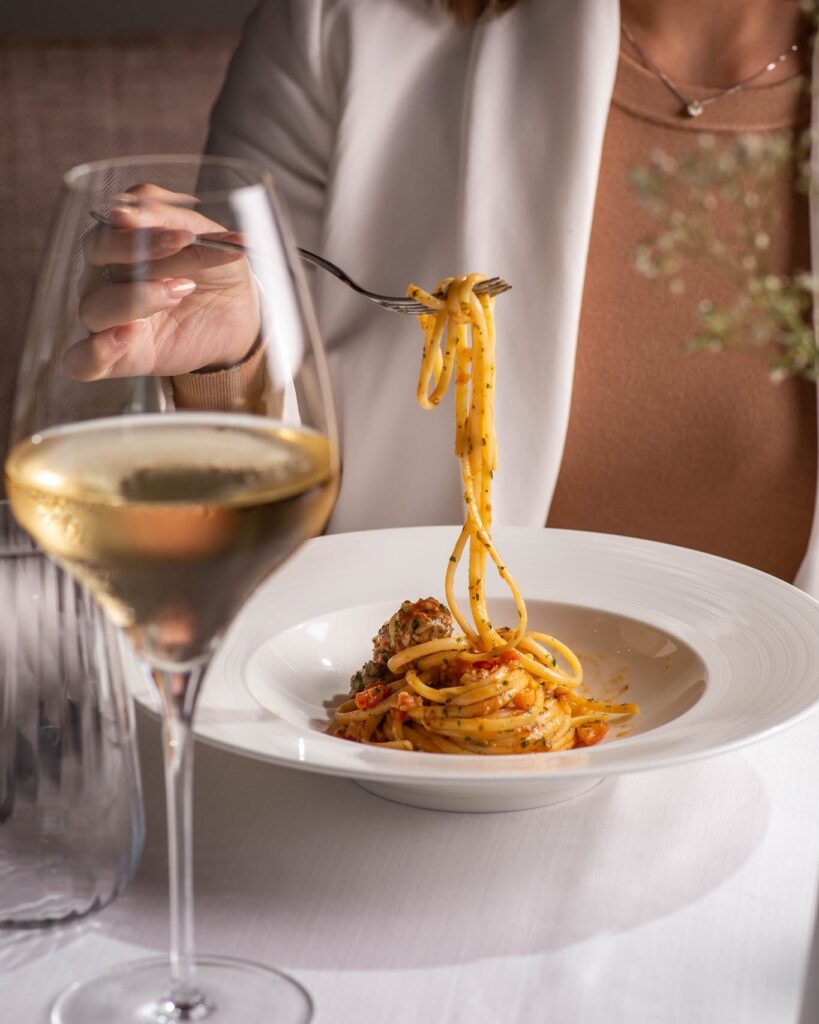
The opening course, Essenza del Peperone, arrived as an exercise in restraint. Bell pepper formed the foundation, its natural sweetness concentrated through careful preparation. Capers punctuated the dish with sharp, briny notes. Aged Parmesan contributed umami depth, whilst crusco pepper from Basilicata added gentle heat and textural crunch. This wasn’t food that shouted for attention. It rewarded focus, revealing layers of flavour that evolved as we ate, establishing a tone of sophistication without pretension.
The seafood courses
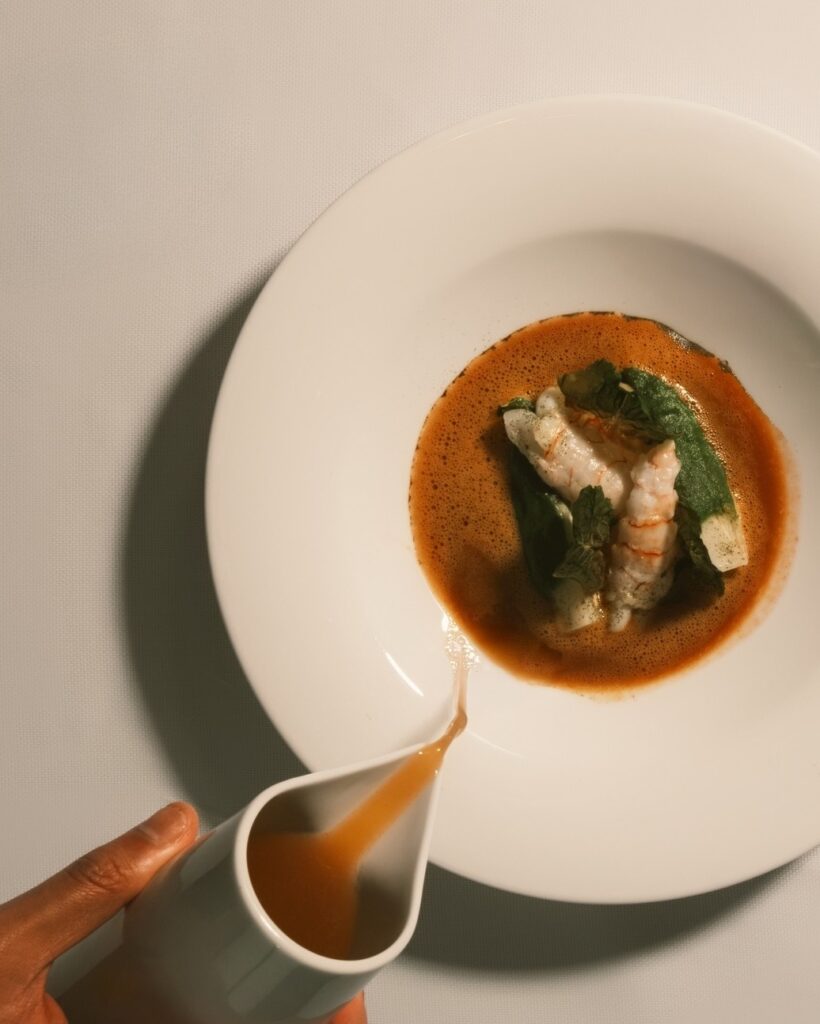
Scampo followed, bringing seared langoustine paired with grilled lettuce and citrus bisque. The langoustine had been cooked with remarkable precision, achieving a golden crust whilst the interior remained tender and sweet. Grilled lettuce might sound unusual, but here it worked brilliantly, providing a smoky counterpoint to the delicate seafood. The citrus bisque tied the elements together, its acidity cutting through richness whilst enhancing rather than masking the langoustine’s natural flavour.
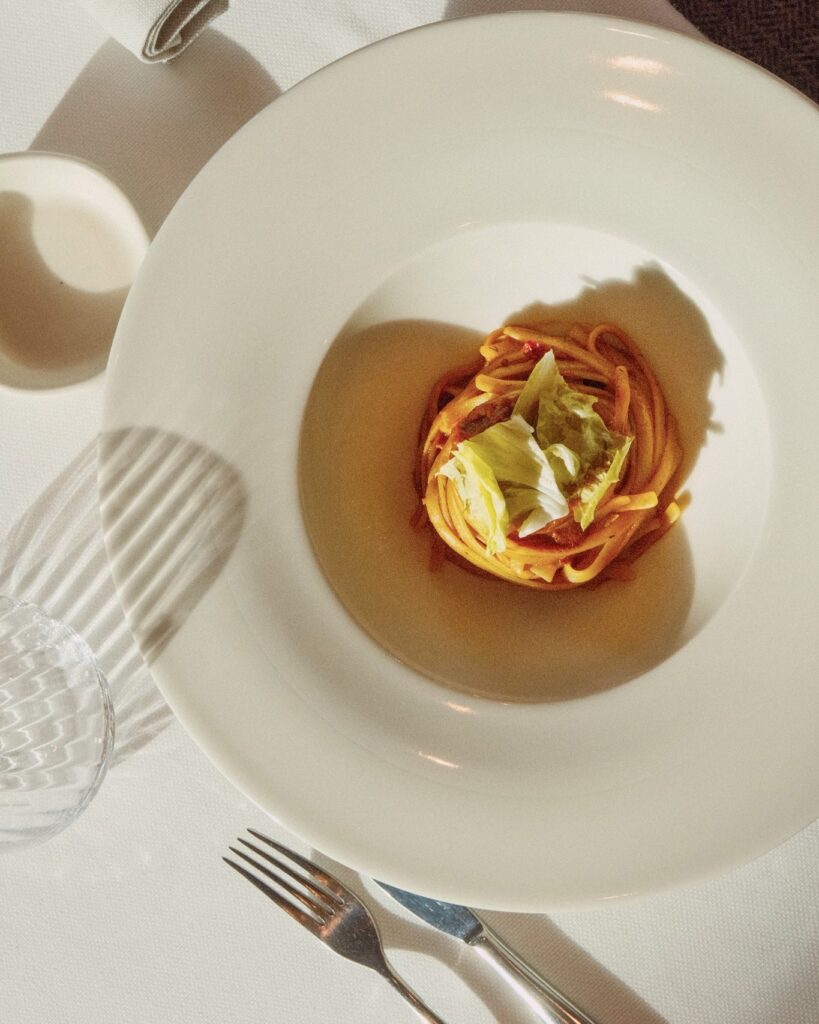
The risotto course, Risotto alle Ostriche, showcased Riserva del Fondatore Carnaroli rice with oysters and sorrel. Risotto reveals a kitchen’s capabilities immediately. The rice must be cooked to that precise point where individual grains maintain integrity whilst the whole achieves creaminess. Stinga achieved this perfectly. Oysters, added at the final moment, retained their ocean freshness and briny character. Sorrel contributed a lemony brightness that prevented the dish from becoming heavy, creating balance between richness and acidity.
Creative heights
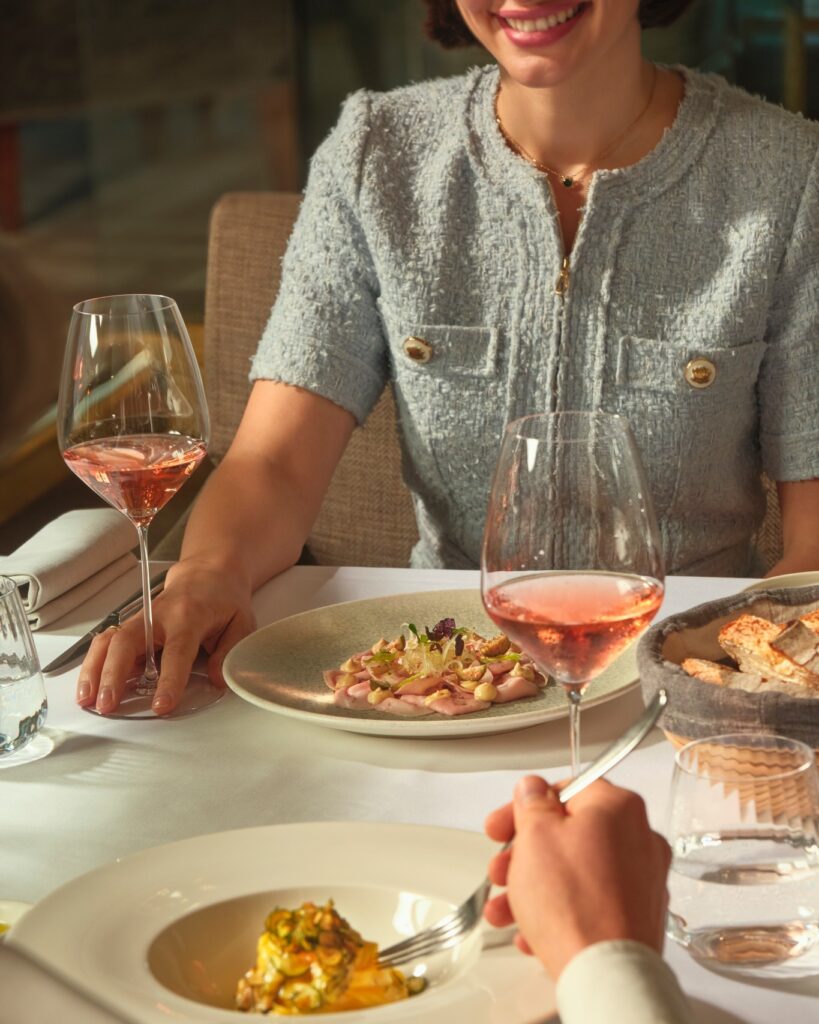
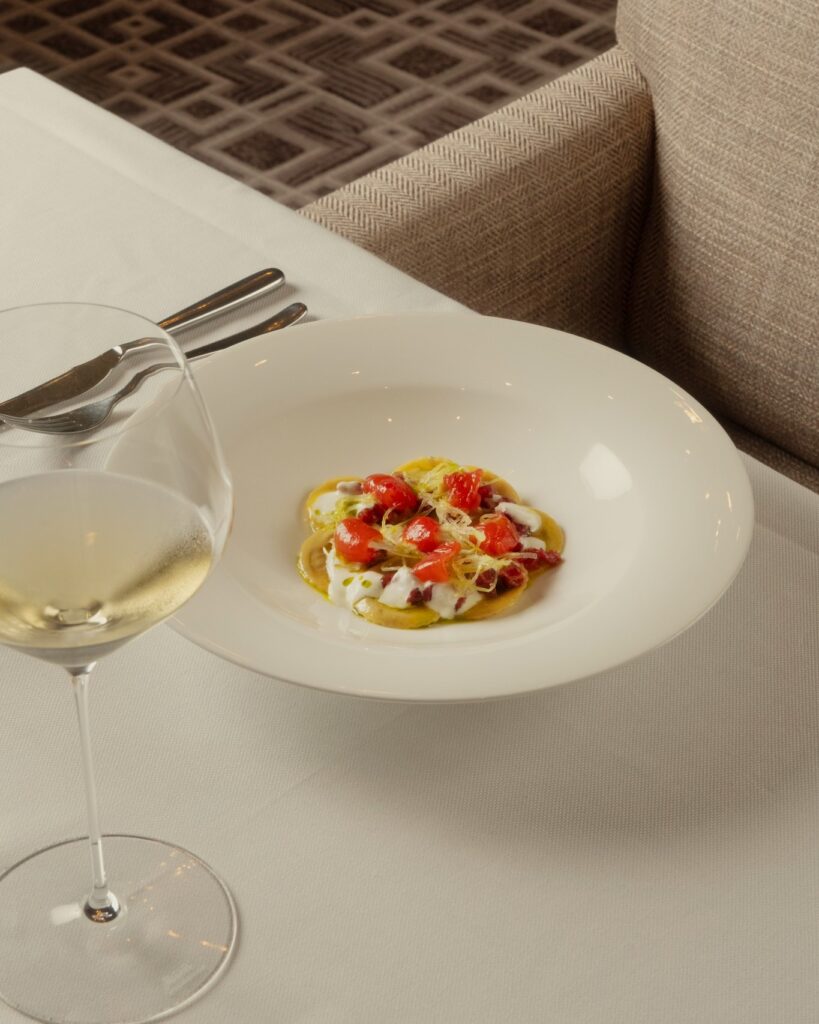
The ravioli course, Ravioli di Melanzane, proved the menu’s creative peak. Smoked eggplant, beef tartare, and celery formed an unlikely trio that somehow achieved perfect harmony. The pasta itself was thin enough to be almost translucent, providing structure without dominating. Smoked eggplant brought depth and a subtle char, whilst beef tartare added richness and a contrasting texture. Celery, often relegated to background roles, here provided freshness and a delicate anise note that unified the components. This was ambitious cooking that succeeded through flawless technique and refined instinct.
Comfort and conclusion
Pollo e Carciofi brought roasted chicken with couscous and artichokes, a dish that could have felt anticlimactic after the ravioli’s invention. Instead, it provided satisfying reassurance. The chicken arrived with crackling golden skin and moist, flavourful meat throughout. Couscous, light and fluffy, had absorbed cooking juices without becoming soggy. Artichokes, prepared to eliminate any bitterness whilst preserving their distinctive character, completed a course that celebrated quality ingredients treated with respect.
The dessert, Rabarbaro, Macis e Basilico, combined rhubarb, basil, strawberry, and mace gelato in a composition that felt like capturing spring on a plate. Rhubarb’s tart intensity found balance in strawberry’s gentler sweetness. Basil added an herbal dimension that somehow made perfect sense with the fruit. Mace gelato, made from the spice surrounding nutmeg, contributed warmth and complexity. This was a dessert for adults, interesting rather than merely sweet.
The grand finale
Tiramisu concluded the meal, assembled tableside with a flourish that enhanced rather than overwhelmed. The traditional components—espresso-soaked savoiardi, mascarpone cream, cocoa—were familiar, but the execution elevated this ubiquitous dessert into something worth remembering. The coffee was robust enough to cut through the cream’s richness, the mascarpone whipped to perfect airiness, the cocoa providing bitter contrast to sweetness. Watching the assembly added ceremony to the conclusion, a reminder that even classic dishes become special when prepared with skill and care.
The wines
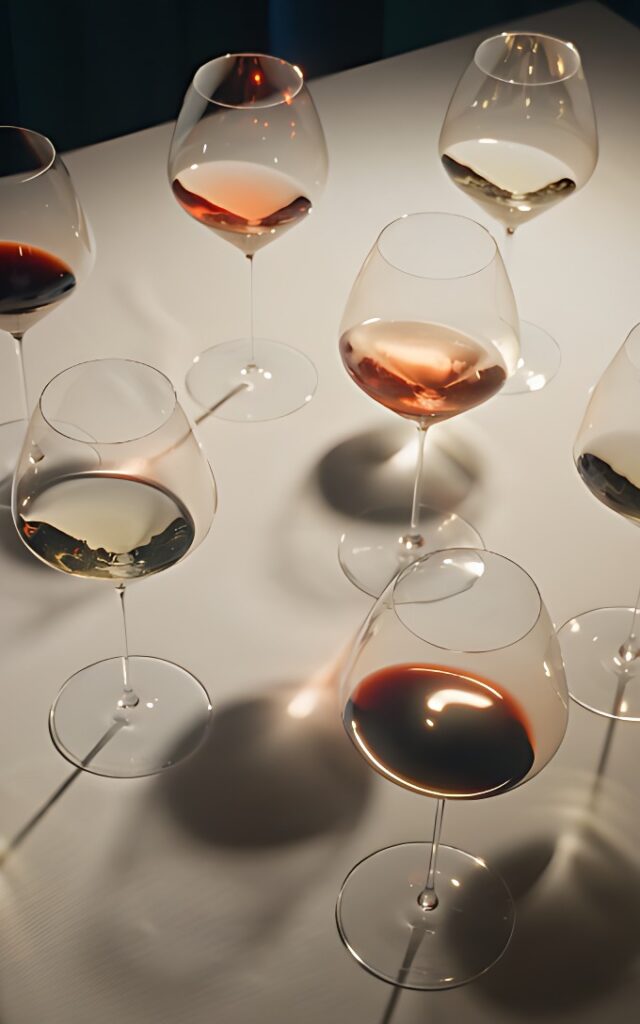
The wine programme emphasises Italian producers, from historic estates to emerging winemakers. We chose wine pairings, which introduced bottles we wouldn’t have discovered independently. A crisp Friulano accompanied the opening courses, its minerality and subtle fruit complementing delicate flavours. A Nebbiolo from Piedmont arrived with the chicken, its structure and acidity working beautifully with the richer dish. Each pairing felt considered and purposeful rather than formulaic.
Service philosophy
Throughout the evening, our server navigated the difficult balance between knowledge and pretension. Questions about techniques or ingredients received detailed, clear answers without sounding rehearsed. The pacing allowed conversation to flow naturally, courses arriving with enough separation to appreciate what we’d eaten without waiting so long that momentum dissipated. Water glasses stayed filled, wine arrived at proper temperatures, and used plates disappeared promptly. These fundamentals, executed consistently, separated the experience from merely competent service.
The vision realised
What elevates Talea beyond technical proficiency is the clarity of purpose running through each course. Guida’s concept of cucina di famiglia, family cooking rooted in tradition, could easily become limiting or nostalgic. Instead, it provides a framework for creativity that feels grounded rather than arbitrary. Stinga honours this vision whilst bringing his own precision and refinement, creating food that respects Italian tradition without being imprisoned by it.
The commitment to seasonal, sustainable ingredients extends beyond marketing language. Produce comes from Emirates Palace’s gardens when possible, supplemented by carefully chosen local suppliers. The menu shifts to reflect peak availability and quality. This isn’t about virtue signalling. It’s about flavour. Ingredients harvested at the right moment and treated properly simply taste superior.
Final thoughts
Talea by Antonio Guida merits its Michelin star through unwavering consistency and clear vision. The cooking respects Italian traditions whilst refusing constraint, the setting enhances without overwhelming, and service achieves polish without losing warmth. For anyone seeking exceptional Italian dining in Abu Dhabi, Talea delivers comprehensively. This is a restaurant that understands luxury not as complication or ostentation, but as doing things properly—sourcing excellent ingredients, applying refined technique, creating an atmosphere where these elements combine into something memorable. We departed satisfied, impressed, and already contemplating our return.